Jakarta’s own traffic figures settle this question better than any neighbourhood guide can. Ten kilometres of city driving took an average of 25 minutes and 31 seconds in 2024, at an average central-Jakarta speed of 20 km/h and 89 hours a year lost per driver, per figures reported by Antara. The MRT crosses its entire 15.7 km, thirteen-station north-south line in under 30 minutes, at five-minute intervals in the peak. Decide which of those two numbers your daily journey will run on, and most of the standard advice reorders itself.
Two Jakartas: the 20 km/h city and the 30-minute city
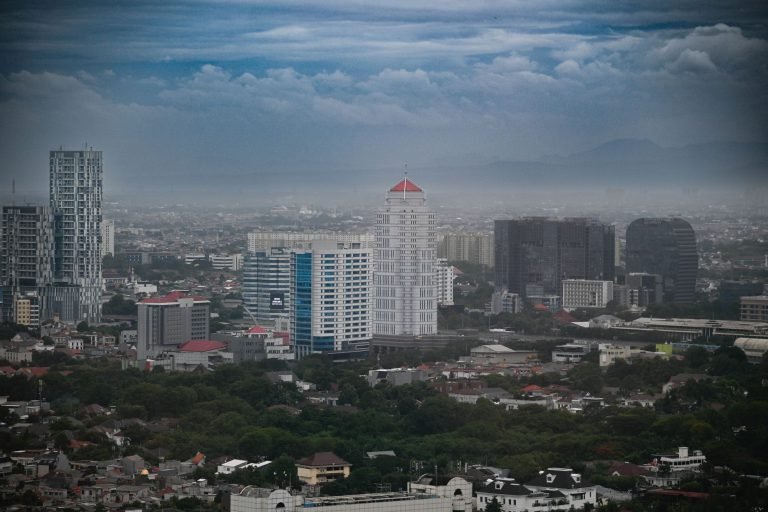
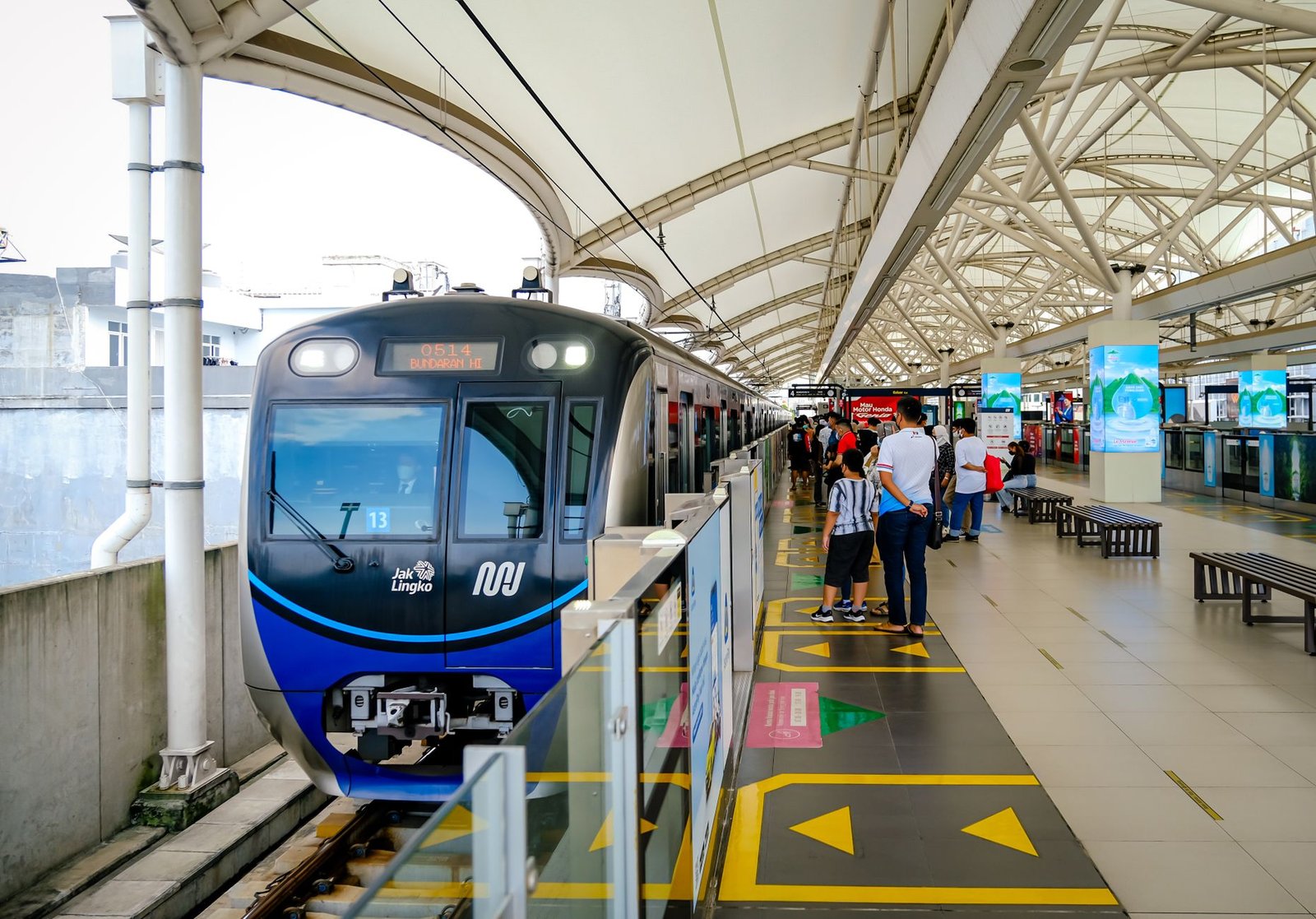
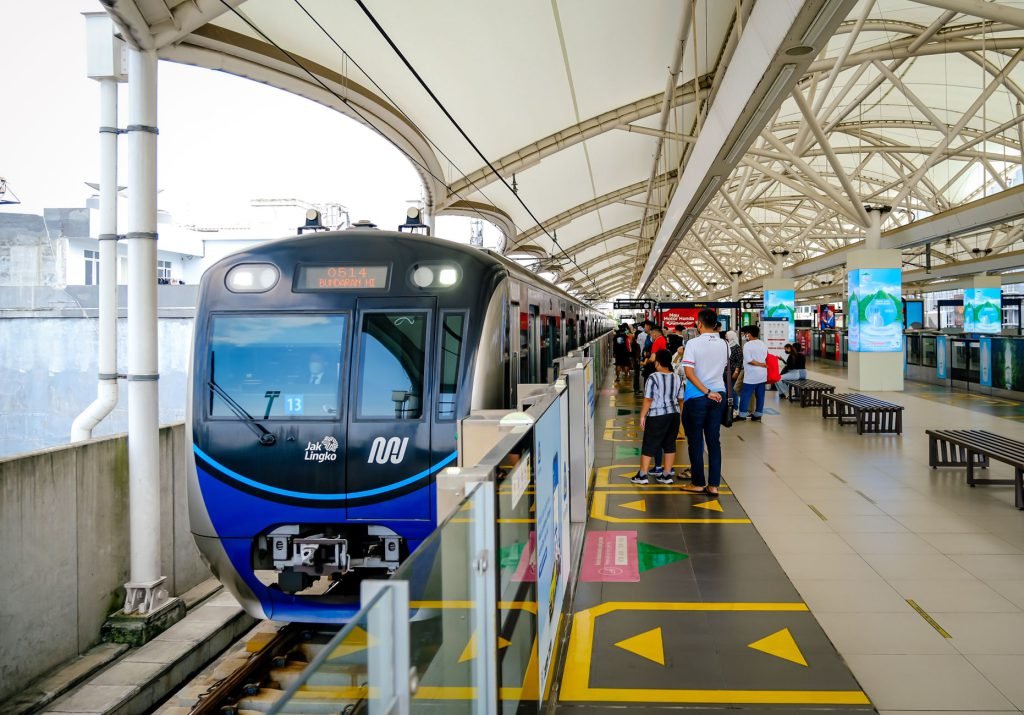
Jakarta is two cities laid on top of each other, and they do not run at the same speed. On the road, the centre moves at about 20 km/h and ten kilometres takes 25 minutes and 31 seconds, up from 23 minutes 20 seconds in 2023, according to 2024 figures reported by Antara. On rail, the Jakarta MRT‘s 15.7 km north-south line is crossed in under 30 minutes, with trains every five minutes at peak and every ten off-peak.
The useful question is therefore not which Jakarta neighbourhood is nicest, but whether your home and your office sit on the same rail spine.
Be sceptical of anyone who tells you the traffic is getting better, or worse. Jakarta’s transport agency reported congestion falling from 53 per cent in 2023 to 43 per cent in 2024, with the city’s TomTom Traffic Index rank improving from 150 to 90. INRIX’s 2024 scorecard put Jakarta seventh most congested in the world, up from tenth. Both are published, they point in opposite directions, and neither changes the absolute numbers above.
Start from your office, not from a neighbourhood name
The usual sequence – pick an area by reputation, then discover the commute – is the wrong way round for Jakarta. Invert it. This takes twenty minutes with a map and a fare table, and it is the most useful twenty minutes you will spend before committing to an address.
- Find the MRT station or TransJakarta halte closest to your office, measured as a walk, not as the crow flies.
- List every station within roughly a twenty-minute ride of it.
- Look for housing within walking distance of those stations only. Whether it should be a kost – a furnished room rented by the month with services included, Indonesia’s standard urban rental format – a serviced apartment or an unfurnished flat is a separate decision: see how a kost, a serviced apartment and a rented flat in Jakarta compare.
- Check the walk at both ends yourself. A 900-metre walk that crosses Jalan Jenderal Sudirman is not the same as one that does not.
- Test the whole journey at 08:00 on a weekday before you sign anything.
How is the Jakarta rail spine actually shaped?
The Jakarta MRT’s north-south line runs 15.7 km from Lebak Bulus to Bundaran HI across thirteen stations, seven elevated and six underground, and opened on 24 March 2019. In order: Lebak Bulus, Fatmawati, Cipete Raya, Haji Nawi, Blok A, Blok M, ASEAN, Senayan, Istora, Bendungan Hilir, Setiabudi, Dukuh Atas and Bundaran HI. Bendungan Hilir, in Tanah Abang, Central Jakarta, is the tenth: three stations from Bundaran HI, two from Dukuh Atas and four from Blok M.
Dukuh Atas is the junction that decides how far the line really takes you, joining the MRT to the LRT Jabodebek, to TransJakarta corridors and to Stasiun Sudirman on the commuter network. Count stations rather than fares: Jakarta’s operators publish a fare rule, not a station-pair table.
TransJakarta is the other half of the spine and far larger than new arrivals expect: it carried more than four hundred million passengers in 2025, well over a million journeys a day, with numbers having doubled over three years; it operates 470 electric buses. Where the MRT does not reach, a corridor usually does.
How do commuting fares work in Jakarta?
Cheaply, provided the journey is on rail or a corridor bus. The rules below are how the published fares are built, not prices for particular station pairs; the rest of a monthly budget is covered in our guide to budgeting for a month in Central Jakarta.
| Mode | How the fare works | Source |
|---|---|---|
| MRT Jakarta | Distance-based: a base fare plus a small charge for each station passed, capped for the full Lebak Bulus to Bundaran HI run | MRT Jakarta fare rule |
| TransJakarta | One flat fare per journey, however far you ride | Antara, integrated fare |
| JakLingko, multi-mode | A single capped fare across LRT, TransJakarta and MRT within three hours | Antara, quoting JakLingko director Ivan R. Tigana |
| Monthly transport pass | Available; worth comparing against single fares once you know how many journeys a week you actually make | Numbeo, 27 August 2026 |
| Taxi and ride-hailing | Metered or app-quoted, starting from a flag fare; the traffic, not the tariff, is what makes it the slow option | Numbeo, 27 August 2026 |
The JakLingko cap runs for three hours from the start of the journey, after which standard per-mode fares resume. On these numbers, a rail commute in Jakarta is a rounding error in a monthly budget. A car buys back none of it: the same journey by road runs at 20 km/h in the centre, and parking in central buildings is a separate monthly line.
Do you need a car in Jakarta?
For a single professional living within walking distance of the Sudirman rail spine and working on it, no, and the traffic figures are the whole argument: 20 km/h in the centre, more than 25 minutes for ten kilometres, 89 hours a year lost. For a family with school runs across the city, or anyone whose office sits away from a station or a corridor, the answer changes.
Taxis and app-based ride-hailing both operate in Jakarta and are a reasonable fallback for the odd late or awkward journey, but they sit in the same 20 km/h traffic as a private car. If you do keep a car, price the parking first: in central buildings it is usually a separate monthly line, and at both Arcelon buildings in Bendungan Hilir indoor parking is a paid monthly extra on top of the room rate.
Why the standard expat area list may not fit you
Read three English-language guides to living in Jakarta and you will read the same short list of neighbourhood names three times. Bendungan Hilir, in Tanah Abang, Central Jakarta, is not usually on it, despite sitting on the MRT north-south line between the parliamentary complex and the Sudirman office corridor. Those lists are not wrong; they answer a different question.
The question they answer is a family’s: schools, gardens, several bedrooms, a driver. A single professional or a couple on a twelve-month contract is optimising for something else. Mercer’s Global Mobility Practice Leader for Asia, Mario Ferraro, said in 2019 that expatriates in Jakarta tend to choose expensive central housing markets precisely because of congestion and travel time. That logic holds; the list of areas it produces is worth rebuilding from your own office.
This article ranks no Jakarta neighbourhood against another and publishes no rent bands, because nothing of that kind could be verified to a source worth citing. It gives the method instead. If Bendungan Hilir is one of the places your method throws up, our full guide to living in Bendungan Hilir covers it in detail.
Rail beyond the MRT: which stations serve the airport and the commuter lines?
Two commuter stations matter to anyone on the central spine. Stasiun Sudirman, at Jalan Kendal 1, Menteng, serves the Cikarang Commuter Line and, since April 2025, the Soekarno-Hatta Airport Commuter Line, and interchanges with MRT Dukuh Atas BNI, the LRT Jabodebek and TransJakarta corridors 1, 4 and 6. Stasiun BNI City, in Kebon Melati, Tanah Abang, Central Jakarta, has run the airport train since 26 December 2017 and the Cikarang KRL since 30 July 2022.
Write those two names into your notes, not Stasiun Karet. Integration of Karet with BNI City was targeted to begin operating on 28 September 2026, moving KRL boarding and alighting to BNI City; the transport minister has said Karet is not being closed. Any guide naming Karet as your nearest commuter station is describing an arrangement that is changing. Airport runs come early in a posting, and that sequence sits in our guide to the first 90 days in Jakarta.
A worked example: commuting from Bendungan Hilir
Apply the method to one real address. Bendungan Hilir, in Tanah Abang, Central Jakarta, is station ten of thirteen on the MRT north-south line: three from Bundaran HI, two from Dukuh Atas, four from Blok M. It was the fifth busiest station on the network in January 2026, with 308,421 passengers, behind Dukuh Atas BNI, Blok M BCA, Bundaran HI and Lebak Bulus – itself evidence of how many people already make this commute.
Three TransJakarta halte serve the area: Bendungan Hilir on Corridor 1, Semanggi on Corridors 6 and 9, and Gerbang Pemuda on Corridors 3, 9 and 10. Halte Bendungan Hilir and Halte Semanggi are joined by a 574-metre elevated passage, the longest in Jakarta; services on the Gatot Subroto routes run 05:00 to 22:00.
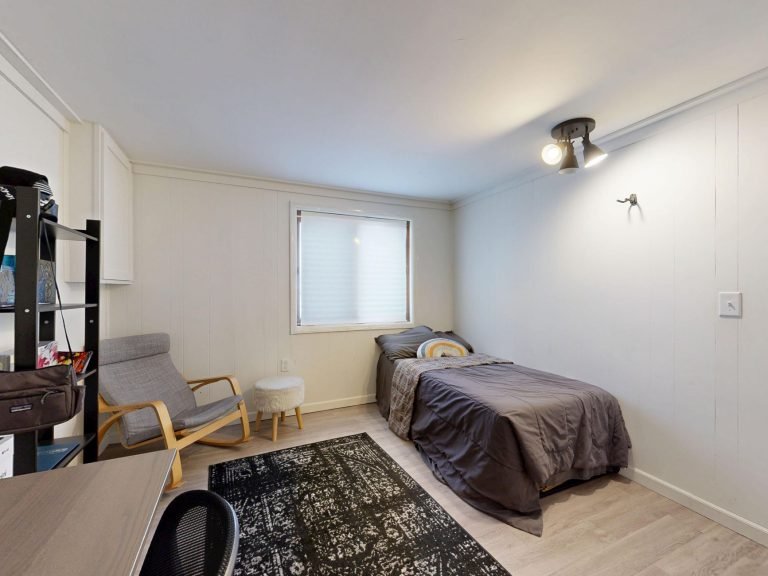
On the housing itself, the same rule applies: walk it before you believe it. Arcelon Executive in Bendungan Hilir and Arcelon Premiere in Bendungan Hilir both let monthly with a one-month minimum stay and with electricity, internet, room cleaning and laundry inside the price; Premiere costs more than Executive, and Arcelon quotes current rates on WhatsApp. Walk from the door to the halte and the station entrance once at 08:00 on a weekday, and you will know more than any listing can tell you.
Fares, timetables and integration dates here were last checked on 30 August 2026; check the linked operator pages for current fares before relying on them.